The most expensive ERP mistakes we see in Jordan are not bad product choices. They are correct products bought two years too early, by companies whose processes were not yet stable enough to encode.
Before you shortlist anything, work out honestly whether you need an ERP at all. These are the signals we look for.
Seven signs you are ready
1. Month-end takes more than five working days
A long close almost always means data is being reconciled by hand between systems. That reconciliation is the work an ERP removes.
2. Two departments give different answers to the same question
When sales and finance quote different revenue for the same month, you do not have a reporting problem. You have two databases pretending to be one.
3. Someone re-keys data every week
Exporting from one system and importing into another is a salary being spent on copying. It is also where errors enter, silently.
4. You cannot answer margin questions per order
"What did we actually make on that job?" should take seconds. If it takes a spreadsheet exercise and an argument, your cost data is not connected to your sales data.
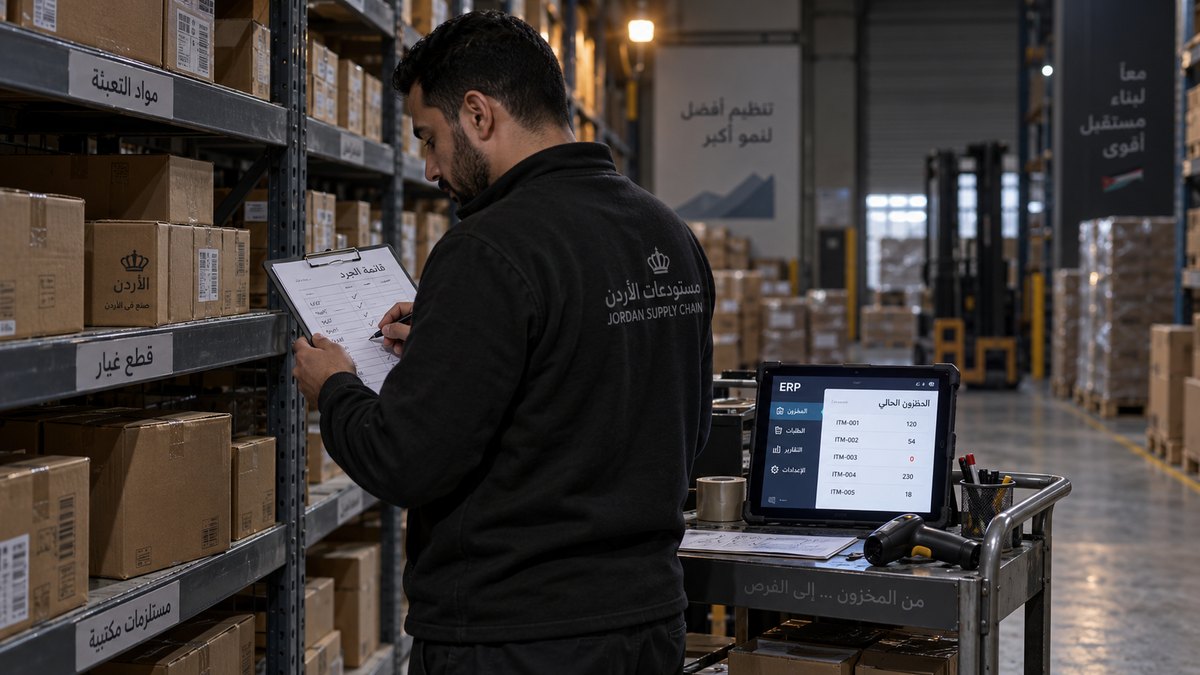
5. Stock on the system does not match stock on the shelf
Persistent variance means movements are recorded after the fact rather than as they happen. That gap grows with volume and never shrinks on its own.
6. Approvals live in WhatsApp
Not a joke, and very common in Jordan. It works until someone leaves, a dispute arises, or an auditor asks who authorised a 40,000 JOD purchase.
7. Compliance is becoming manual work
If JoFotara submission, sales tax returns or payroll reporting are consuming days each month, that is an integration problem with a known solution.
Three signs you should wait
Your processes change every quarter
An ERP encodes how you work. If how you work is still being invented, you will pay to encode it and then pay again to change it. Stabilise first.
The problem is one department, not the business
If only warehouse is struggling, buy a warehouse system. An ERP is a large answer to a small question, and the implementation cost falls on everyone.
Nobody internally will own it
Every successful implementation we have seen had one person inside the company who cared about it more than the vendor did. Without that person, the project stalls at 70% and stays there.
The honest test
Count how many hours a month your team spends moving data between systems, reconciling numbers and chasing approvals. Multiply by loaded salary cost. Compare that to roughly 40,000 JOD a year.
If your manual cost is well below that, you probably do not need an ERP yet — you need better use of what you have. If it is above, the decision has already been made for you; you are simply paying for it in labour rather than licences.
What to do if you are not ready
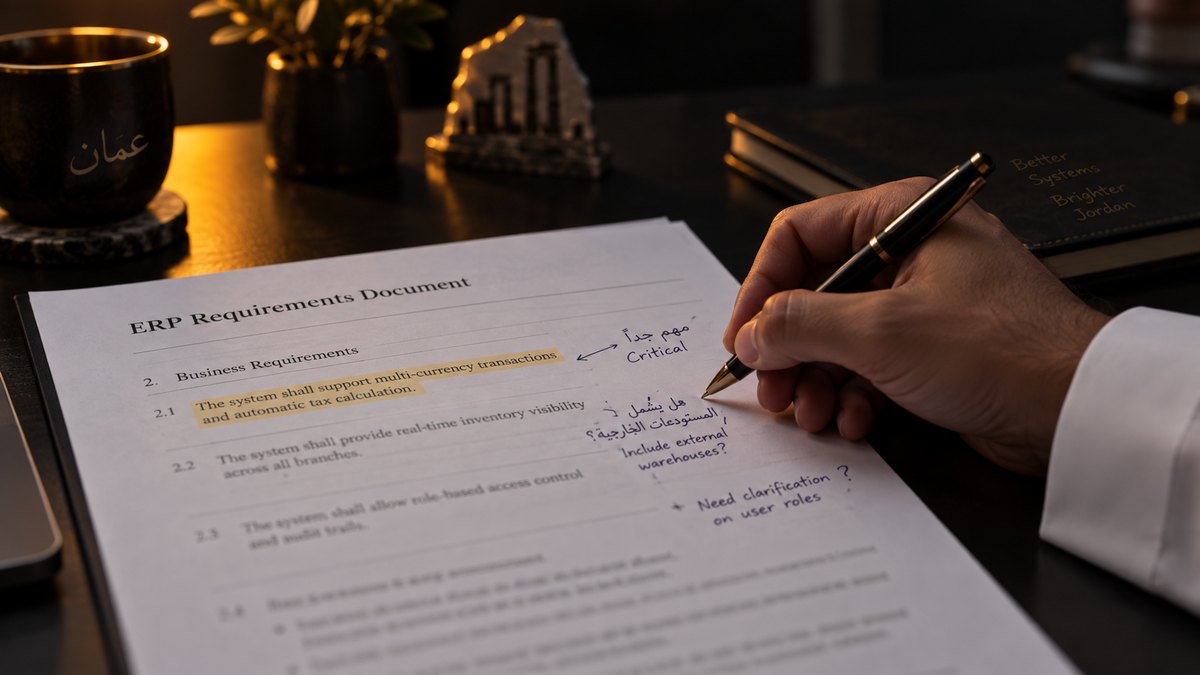
Spend six months documenting and stabilising processes instead. Write down how purchasing actually works, agree it, and follow it. That work is not wasted: it becomes the requirements document when you are ready, and it makes the eventual implementation materially cheaper.